Golden Goose Roofing is your contractor. We inspect, document, estimate, and restore. The claim itself belongs to you — you file it, you communicate with your carrier, and you make the decisions. We do not negotiate, settle, or adjust insurance claims on your behalf; in Virginia, only a licensed public adjuster or attorney can represent a policyholder in that capacity. What we do provide is the thorough, professional documentation and craftsmanship that make the entire process smoother — and that role matters more than most homeowners realize.
How a Storm Damage Claim Works
Every claim is a little different, but most follow the same arc. Here's the typical path from storm to finished roof.
The Storm Hits — and the Clock Starts
Most Virginia homeowner's policies process storm damage from the date of loss, and typically allow up to two years to file. The moment the storm ends, that window opens. Damage isn't always visible from the ground — hail bruising and lifted shingles often go unnoticed until they cause leaks months later.
We track storm events using HailTrace and RadarScope, so we can verify the date, path, and severity of the weather that hit your property — an independent record that supports everything documented afterward.
Professional Inspection & Documentation
Before you ever call your insurance company, get the roof inspected by someone qualified. This is the single most consequential decision in the entire process. An untrained eye misses damage; a poorly documented inspection gives your carrier an incomplete picture from day one — and incomplete pictures lead to incomplete settlements.
Our HAAG Certified inspectors get on the roof and document every observed condition with photos — using CompanyCam for organized job-site documentation and EagleView aerial measurements for precision. The inspection is free, and there's no obligation to file or to hire us.
You File the Claim
If the inspection finds storm damage, you decide whether to file. You call your carrier or file online, report the date of loss, and they assign a claim number and an adjuster. This step is yours — and that's not a technicality. It keeps you in control of your own claim from the start.
You'll have our complete inspection report in hand when you file, so you can describe the damage accurately and confidently. We're available to answer questions about anything in our report.
The Adjuster Inspection
Your insurance company sends an adjuster to inspect the property. Their job is to assess covered damage and write the carrier's scope of loss. Adjusters are often working many claims after a storm event, sometimes quickly — and findings can vary depending on what's visible and documented on the day they visit.
This is game day for us. As your contractor, we can be on-site during the adjuster's visit — walking the roof, presenting our documented findings, and answering technical questions about our scope and estimate. Having the damage already professionally documented means nothing gets overlooked because it wasn't visible or wasn't pointed out.
The Carrier's Decision & Scope of Loss
After the inspection, your carrier issues a decision and — if approved — a scope of loss and estimate, usually written in Xactimate. It itemizes what they'll pay for. Sometimes legitimate items are missing from the initial scope simply because they weren't documented or visible at the time.
Our estimates are written in Xactimate too — the same software your carrier uses. If items within our scope of work were missed in the carrier's estimate, we provide supplemental documentation of those items so your carrier has complete and accurate information to review. Decisions on coverage always rest with you and your carrier.
Restoration
Once your claim is approved and you've chosen your contractor, the work begins. For most homeowners with a qualifying claim, your only out-of-pocket cost is your deductible — which, under Virginia law, you are required to pay. Be wary of any contractor who offers to "eat" or rebate your deductible; that practice is illegal in a growing number of states and can jeopardize your claim payout.
We execute the full restoration — roofing, siding, gutters, windows, interior rebuild if needed — as one coordinated project with one point of contact, backed by our 10-year workmanship warranty and TAMKO Pro Platinum manufacturer credentials.
Depreciation Release & Final Payment
Most policies pay in two parts: an initial payment (actual cash value) and the recoverable depreciation, released after the work is completed and documented. Your carrier typically requires proof of completion — and increasingly, proof that you paid your deductible — before releasing the final funds.
We provide the completion documentation, final invoice, and photos your carrier needs to release recoverable depreciation — closing the loop cleanly so you receive everything your policy entitles you to.
Why an Experienced Contractor
Changes the Outcome
You can't control the storm, the adjuster, or the carrier. The one thing you fully control is who documents your damage and performs your restoration. Here's why that choice carries so much weight.
Documentation Is Everything
Your carrier can only pay for what's documented. A HAAG Certified inspection with photo evidence, aerial measurements, and a carrier-format Xactimate estimate gives your claim a complete, professional foundation from the first phone call. Thin documentation is how legitimate damage goes unpaid.
One Shot at First Impressions
The initial scope of loss anchors the entire claim. Items missed at the adjuster inspection are harder to add later. An experienced contractor on the roof during that visit — pointing out documented findings in real time — is the difference between a complete first scope and months of follow-up.
Speaking the Carrier's Language
Insurance scopes are written in Xactimate line items, not plain English. A contractor fluent in that format produces estimates your carrier can review directly — fewer translation errors, fewer delays, fewer disputes over what a repair actually involves.
Protection From Bad Actors
After every major storm, out-of-state crews flood Virginia neighborhoods with high-pressure pitches and deductible gimmicks. A local, licensed, credentialed contractor — one you can verify through HAAG, TAMKO, and the Roofing STRONG Alliance directory — will still be here when the warranty matters.
The Restoration Itself
An approved claim only helps you if the work is done right. Manufacturer-certified installation, code-compliant assemblies, and a real workmanship warranty determine whether your new roof lasts 25 years or fails in five. The claim is the beginning — the craftsmanship is the point.
Knowing the Boundaries
An experienced contractor also knows what they're not allowed to do. If your claim is disputed and you need someone to negotiate with your carrier on your behalf, that's a licensed public adjuster or attorney — and a trustworthy contractor will tell you so plainly and point you in the right direction, just like we do.
What Storm Damage
Actually Looks Like
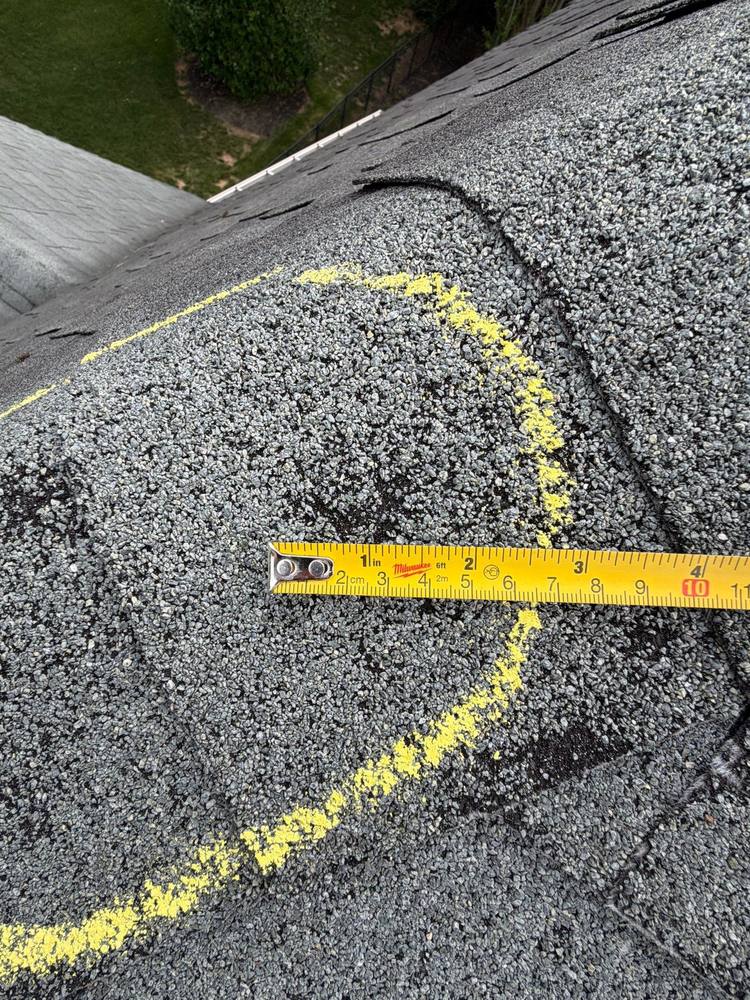
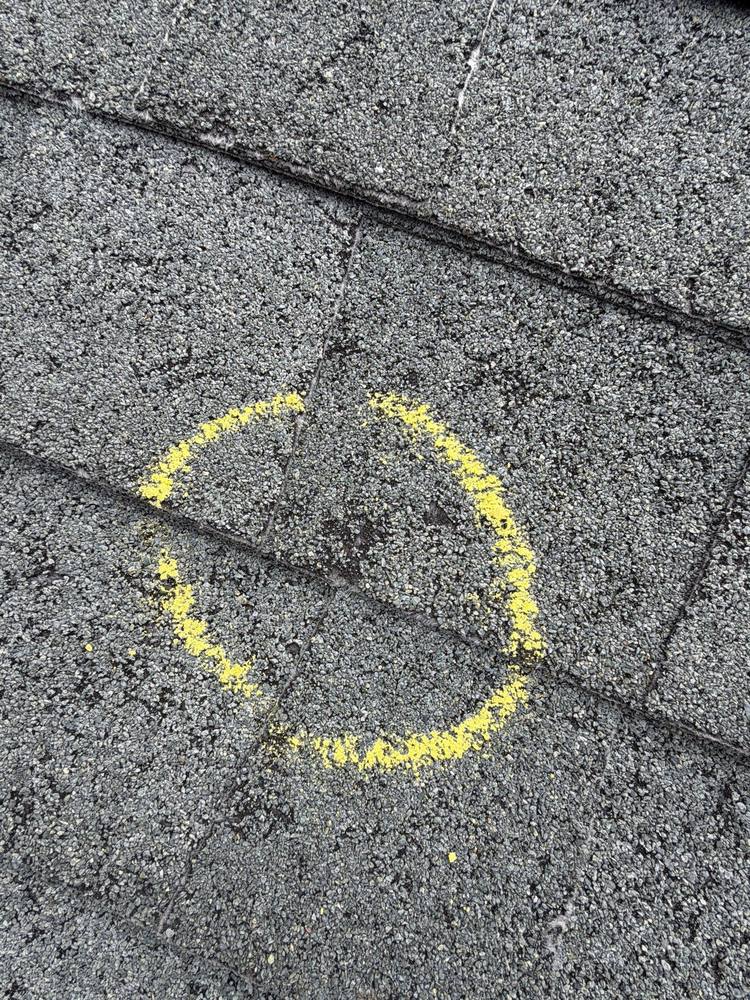
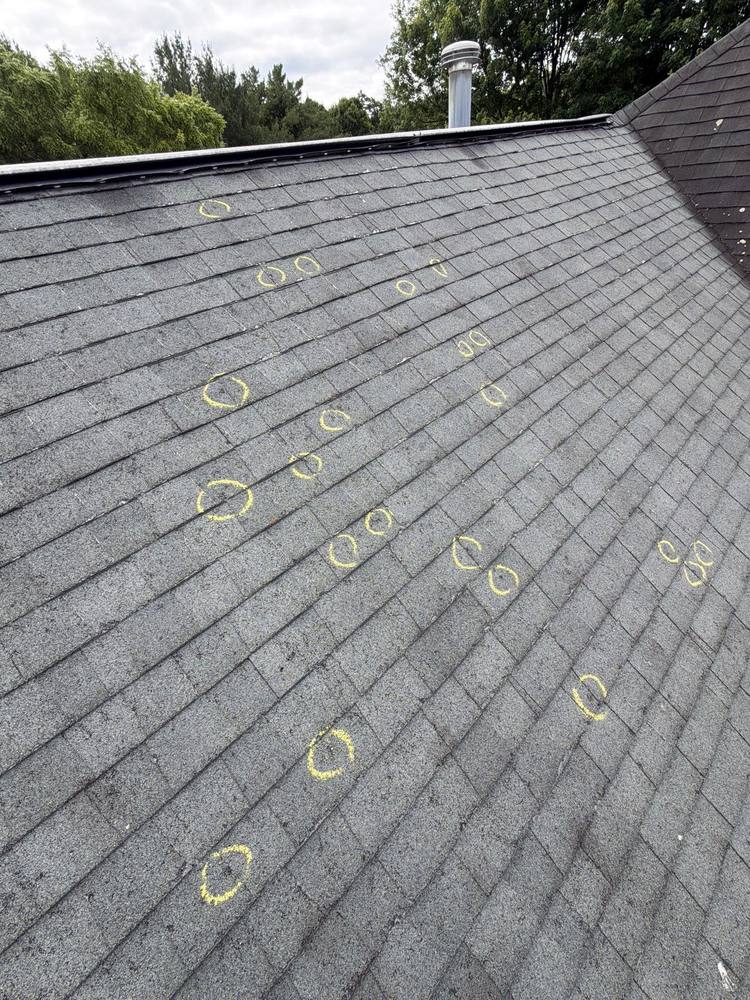
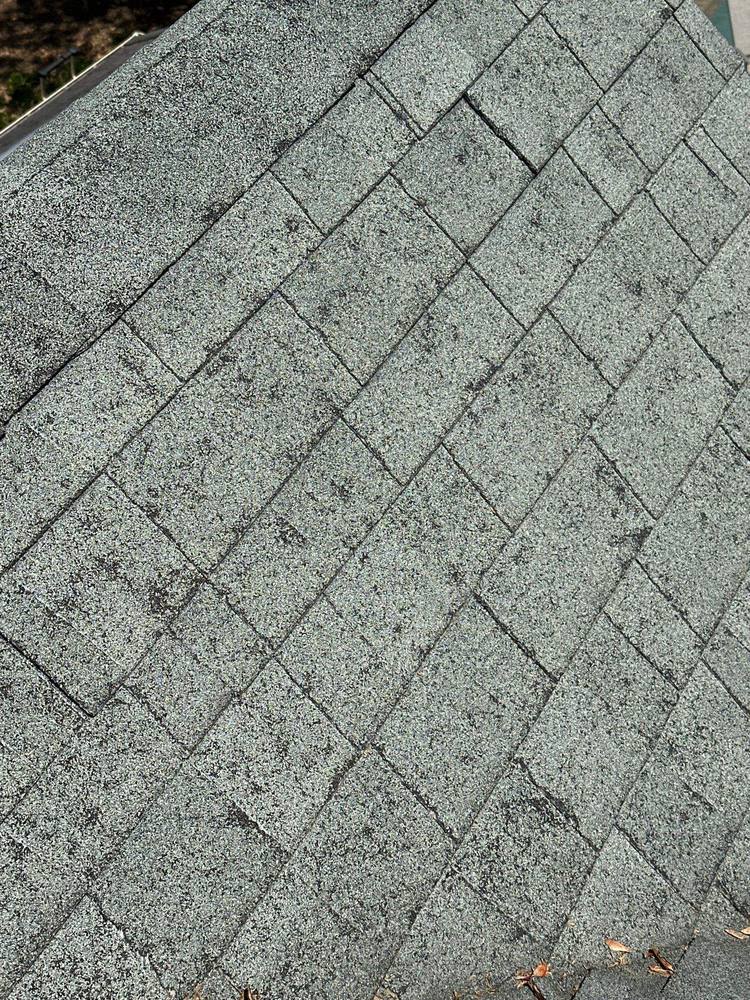
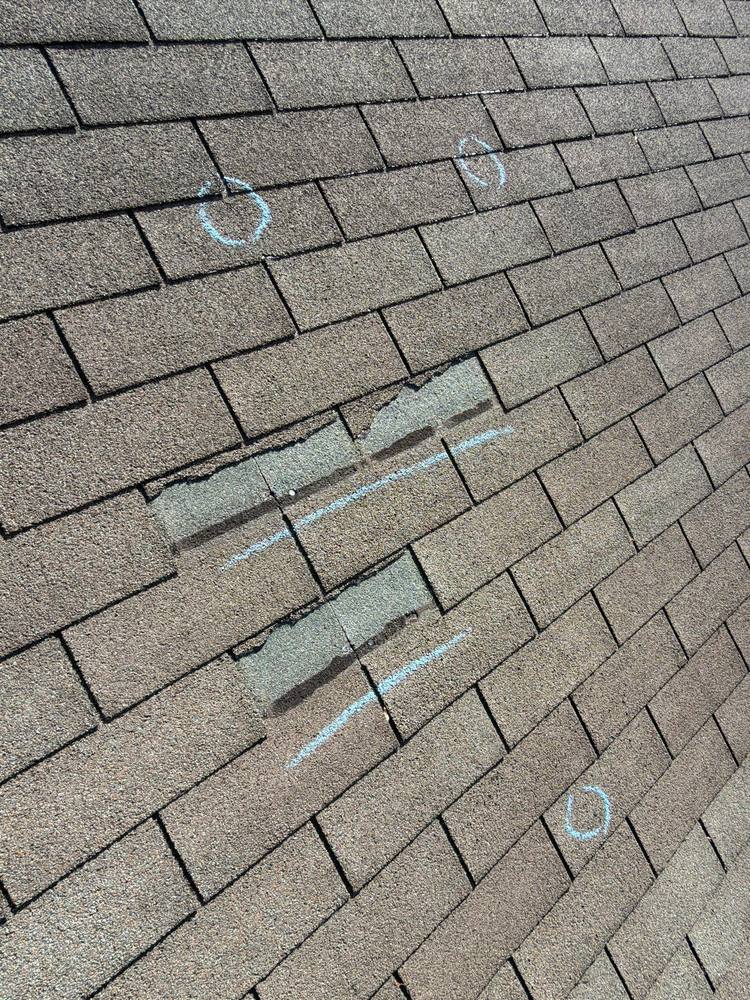
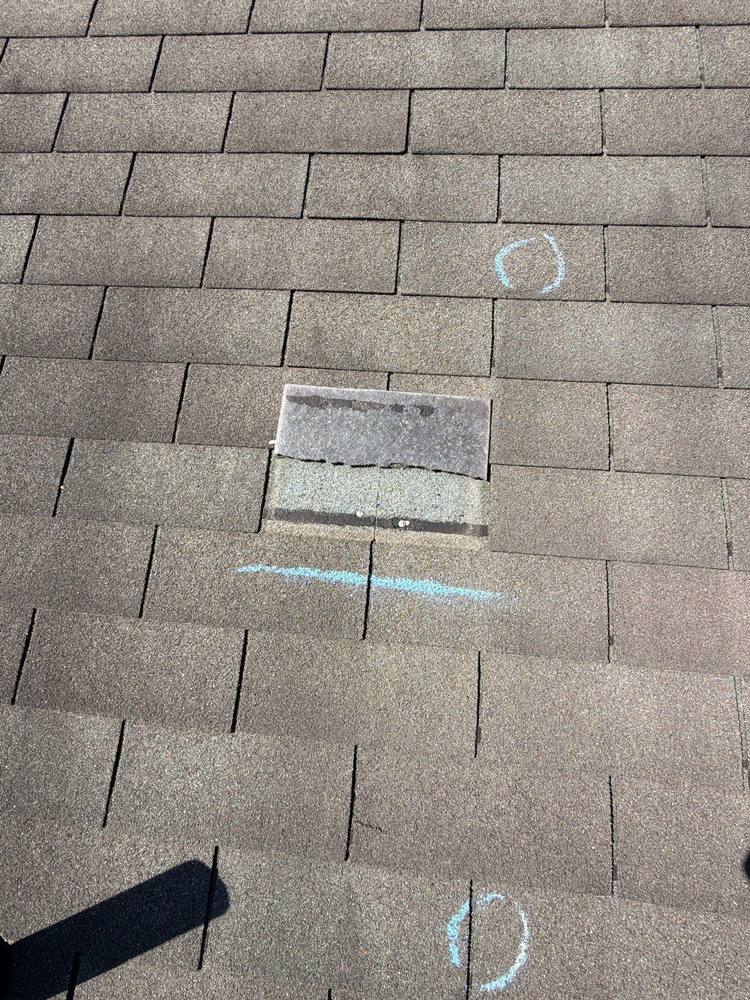
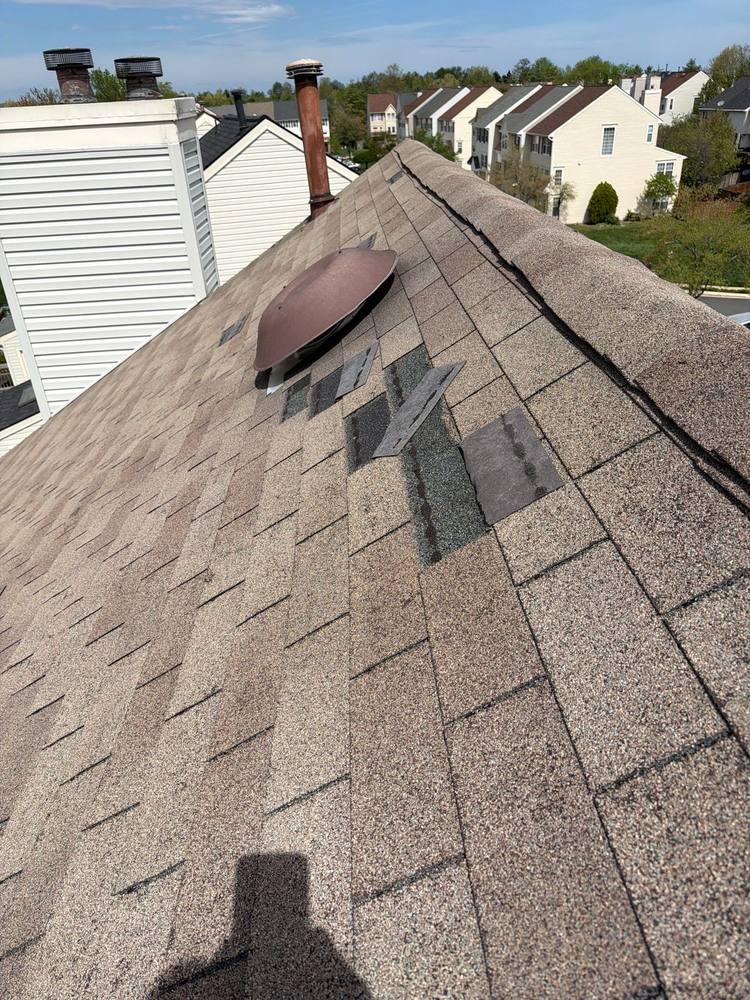
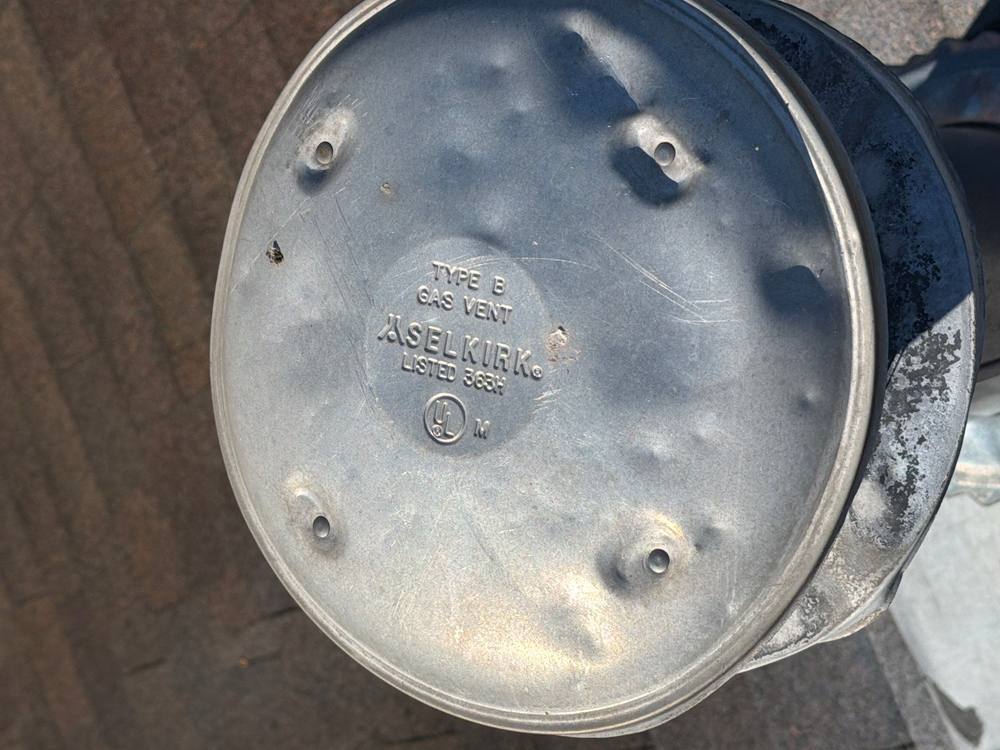
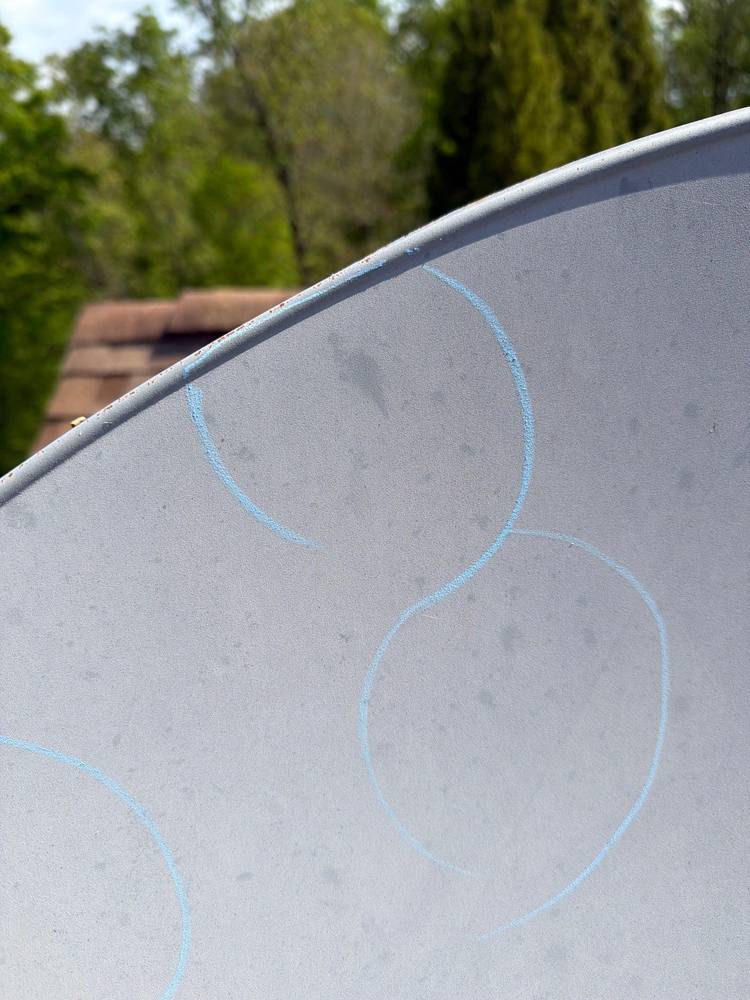
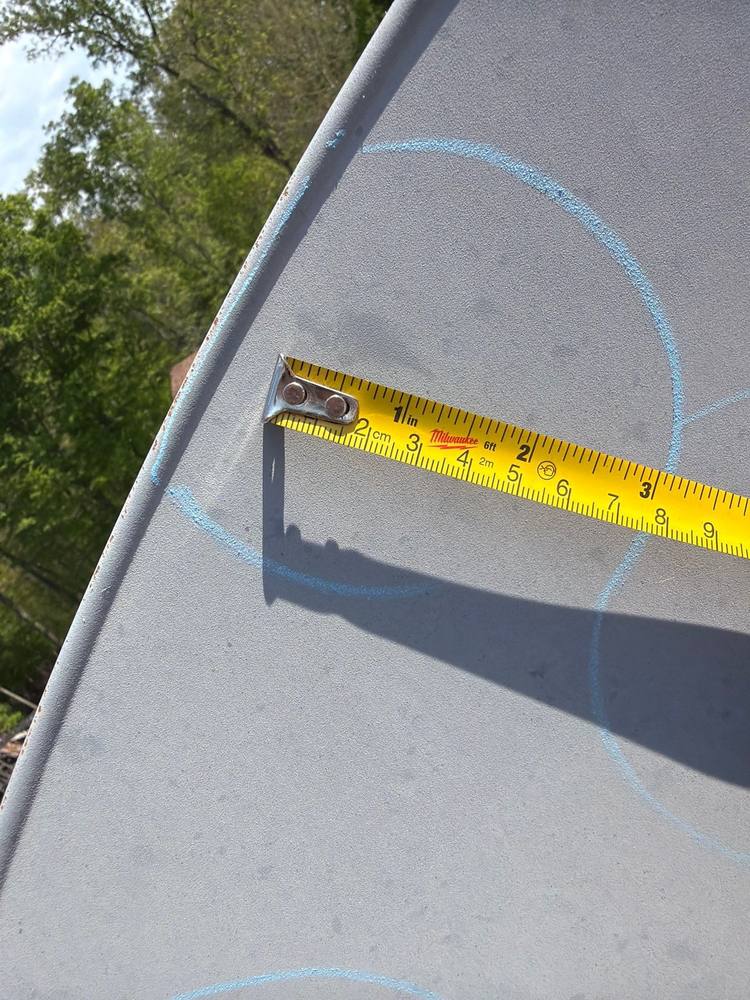
Every photo below is from a real Golden Goose inspection in Northern Virginia — chalk marks and all. This is what our HAAG Certified inspectors document on the roof, and what an untrained eye walks right past.
All photos taken by our team on actual inspections in our service area.
Hail Damage — Asphalt Shingles
Wind Damage — Asphalt Shingles
Wind doesn't bruise — it grabs. Tabs crease, lift, tear, and blow off entirely, usually starting at edges, ridges, and the field areas where sealant has aged. Exposed mat and underlayment are open doors for the next rainstorm, which is why wind damage compounds faster than hail.
Soft Metals — The Confirmation Evidence
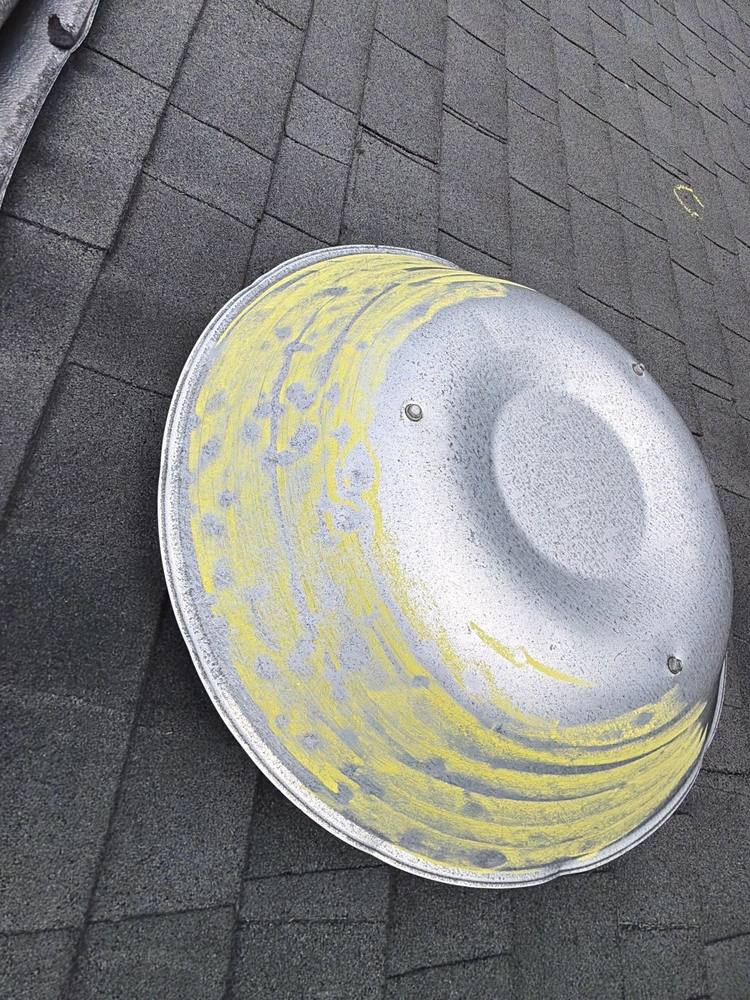
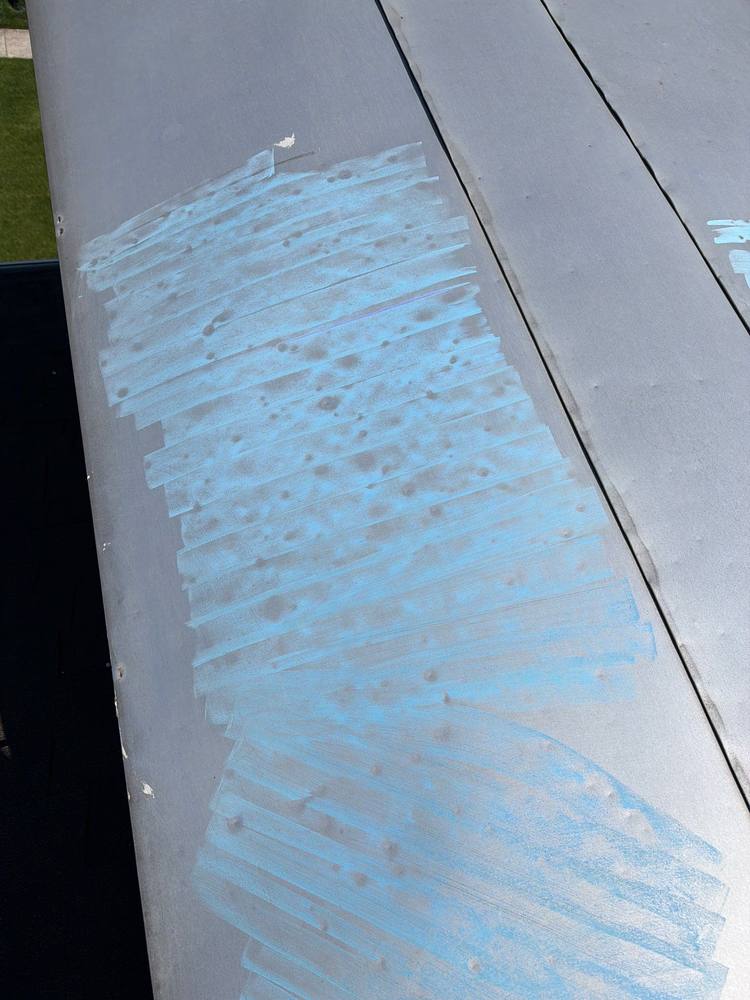
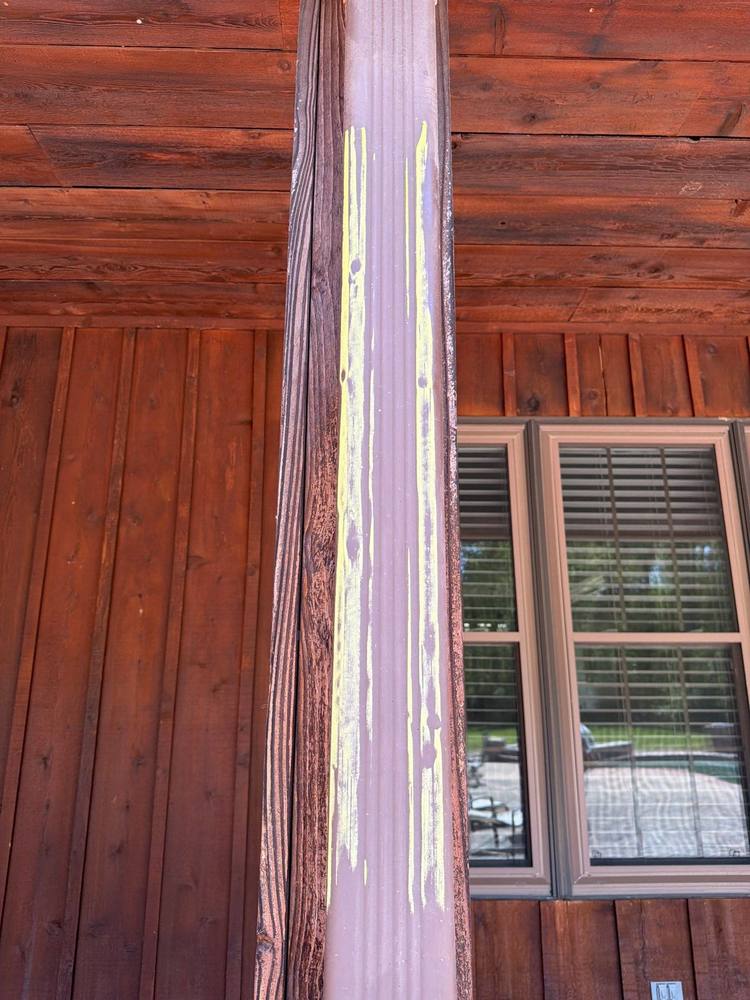
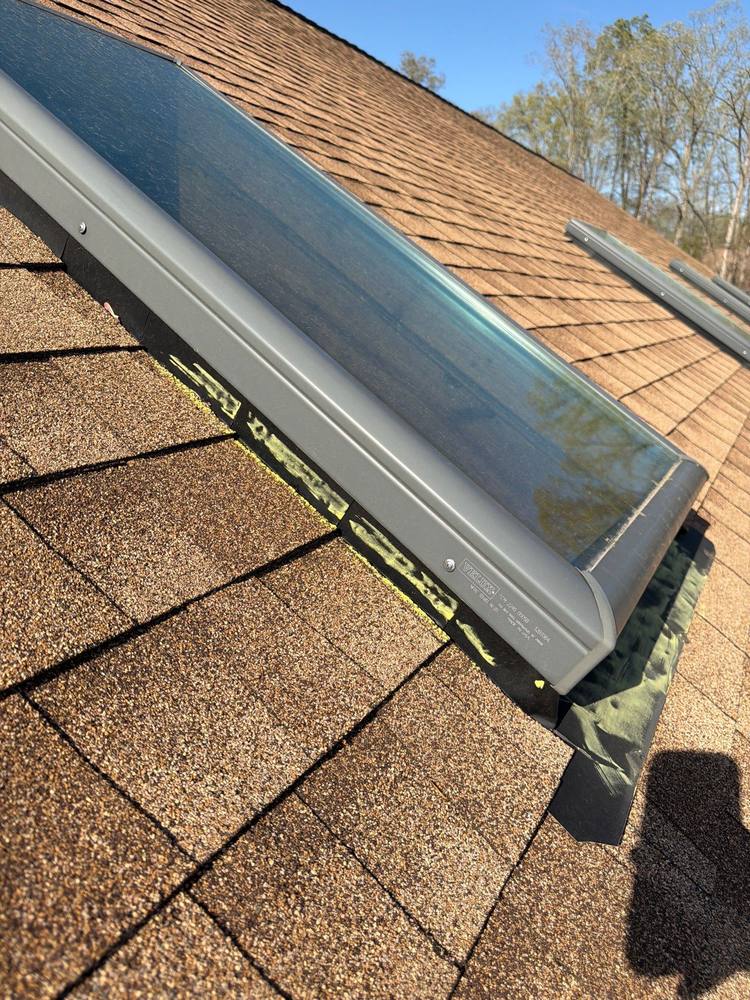
Aluminum and galvanized steel dent at smaller hail sizes than shingles bruise. Vents, flashing, gutters, and downspouts act as a permanent record of the storm — we document them on every inspection because they corroborate what we find on the shingles.
Spatter & Strike Evidence — Not Damage, But Proof
Spatter is where hail knocks oxidation or grime off a surface, leaving clean marks. It fades within weeks — which is exactly why it's valuable: it verifies the event happened recently, approximates hail size, and establishes direction. A HAAG inspector reads spatter the way a tracker reads footprints.
If anything on this page looks like your roof, vents, or gutters after a recent storm — it costs nothing to have us confirm it.
Free Inspection →Key Terms You'll Hear
Date of Loss
The date the storm damaged your property. Your filing window and your claim are anchored to this date — which is why storm verification records matter.
Scope of Loss
The carrier's itemized list of covered damage and what they'll pay to repair it. The quality of the initial inspection directly shapes this document.
Deductible
Your share of the loss, set by your policy. You're required to pay it — and contractors who offer to waive it are breaking the rules, not doing you a favor.
ACV vs. RCV
Actual Cash Value is the depreciated worth paid up front; Replacement Cost Value is the full cost to replace. The difference is paid as recoverable depreciation after work completes.
Recoverable Depreciation
The held-back portion of your claim, released once the work is finished and documented. Skipping the repairs usually means forfeiting this money.
Supplement
Documentation of legitimate scope items missing from the carrier's initial estimate — submitted for the carrier's review so the scope reflects the actual work required.
Start With the Right First Step
Every strong claim starts with a thorough inspection. Ours is free, HAAG Certified, and carries zero obligation — whatever you decide to do next.